
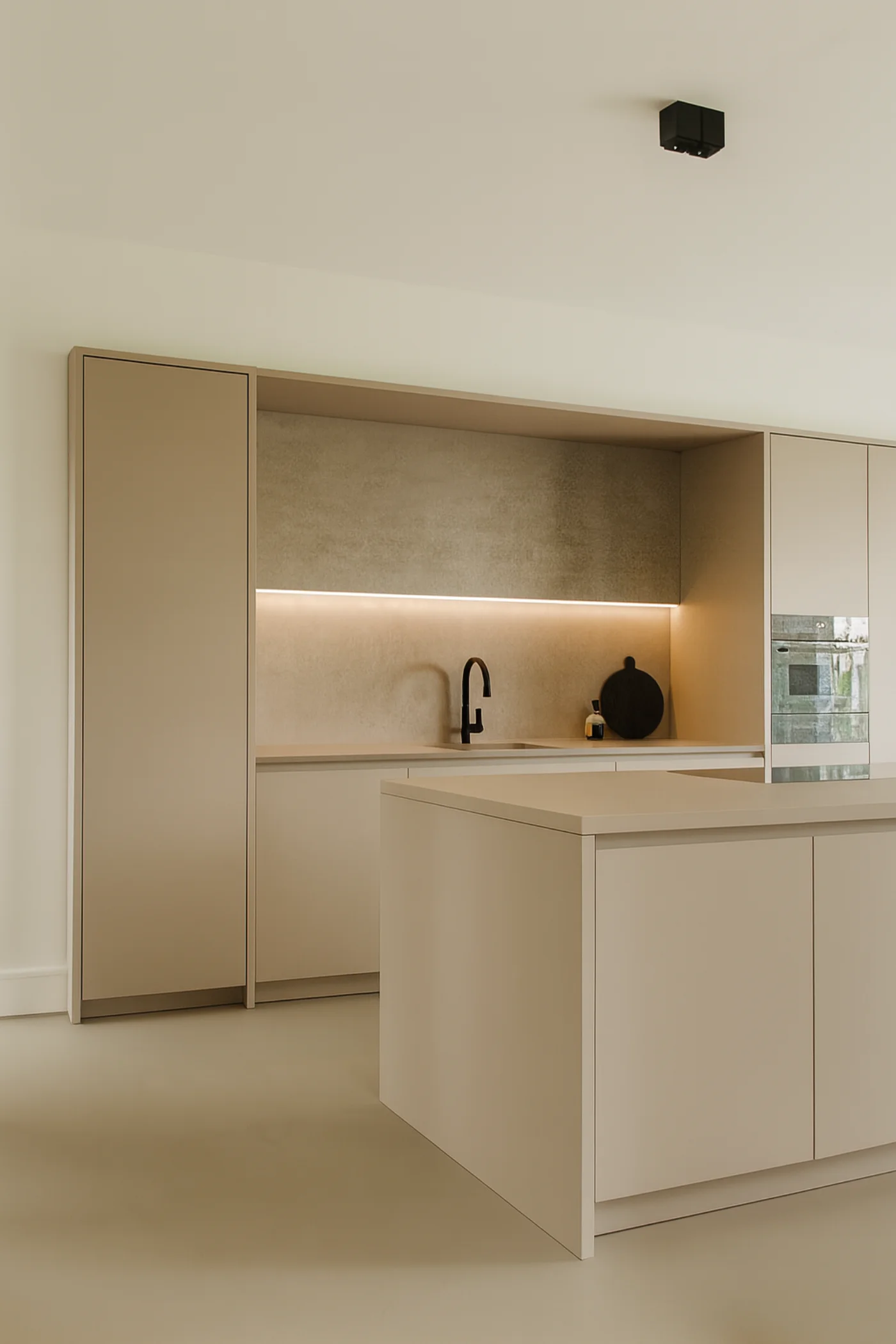
Lavasteen in the kitchen
seamless, dense, durable.
A finish with ground lava stone in epoxy — waterproof through the epoxy components themselves, slip-resistant under daily use. For floor and wall, with multiple PU layers for extra wear resistance in heavy-duty kitchens.
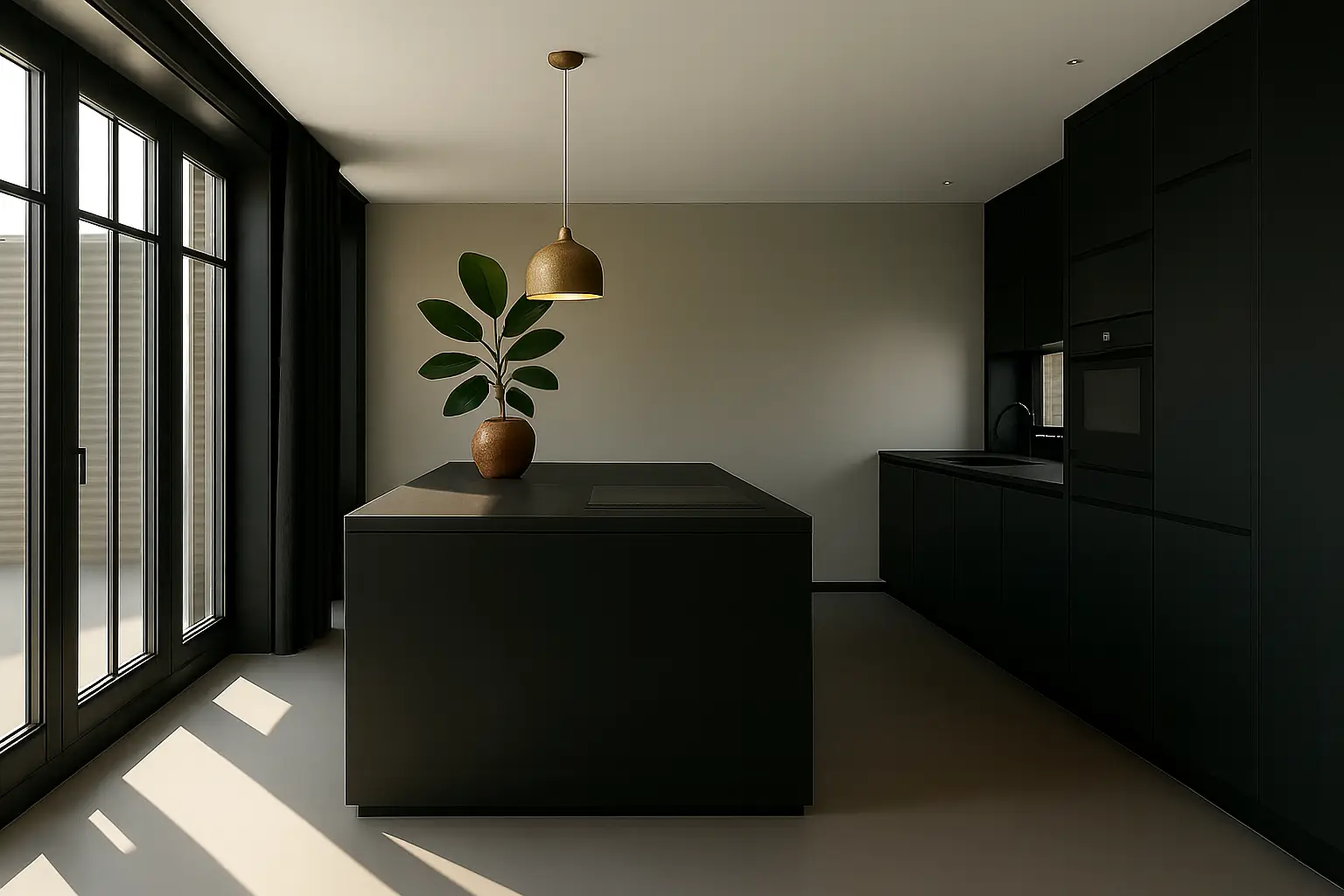
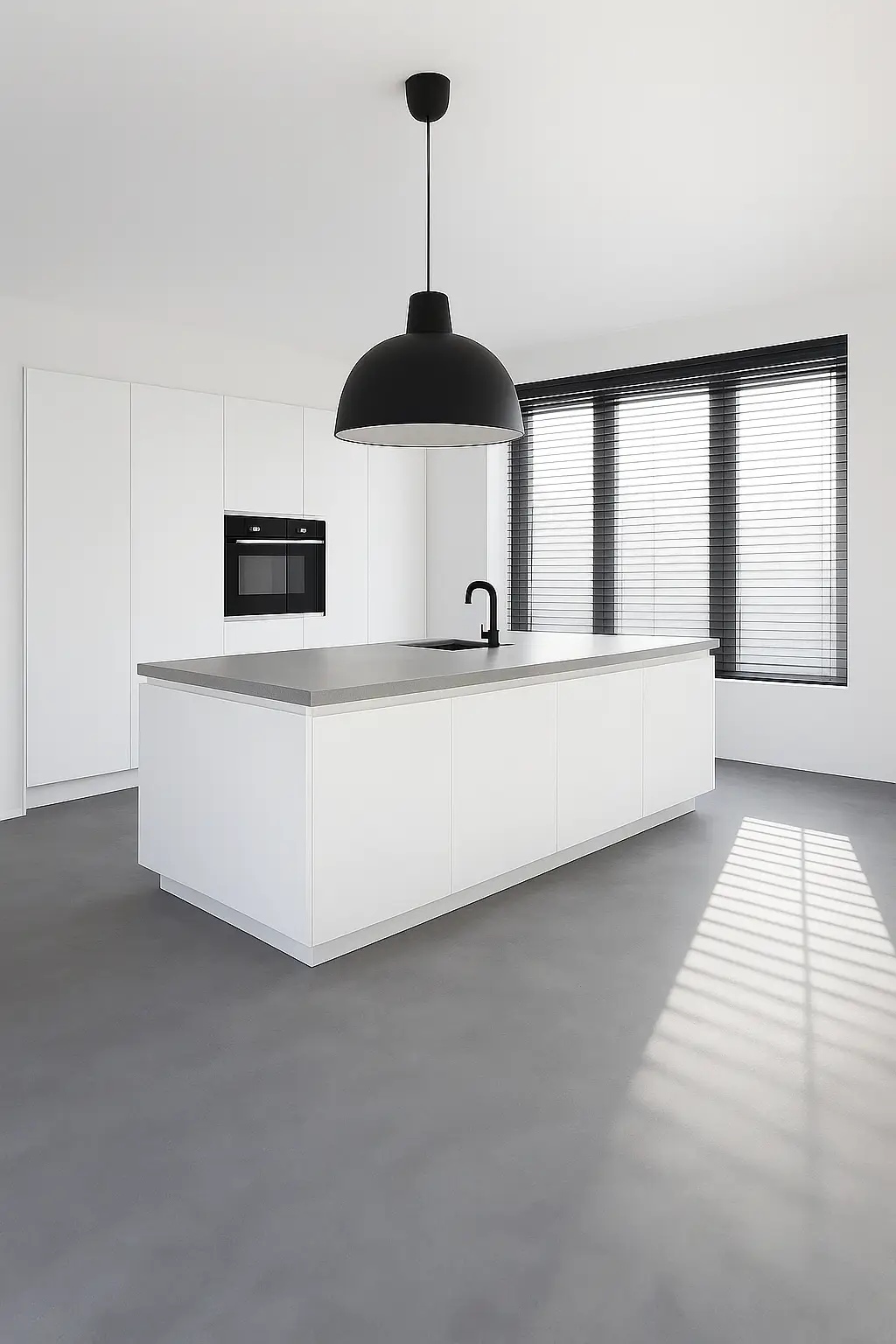
One floor for the entire open-plan kitchen
Lavasteen Seamless Floor is a poured epoxy floor in which ground lava stone is incorporated. The floor runs continuously — from beneath the kitchen island, past the dining table, to where the kitchen transitions into the living room.
No joints where crumbs can fall, no tile edges that eventually lift under sliding furniture.
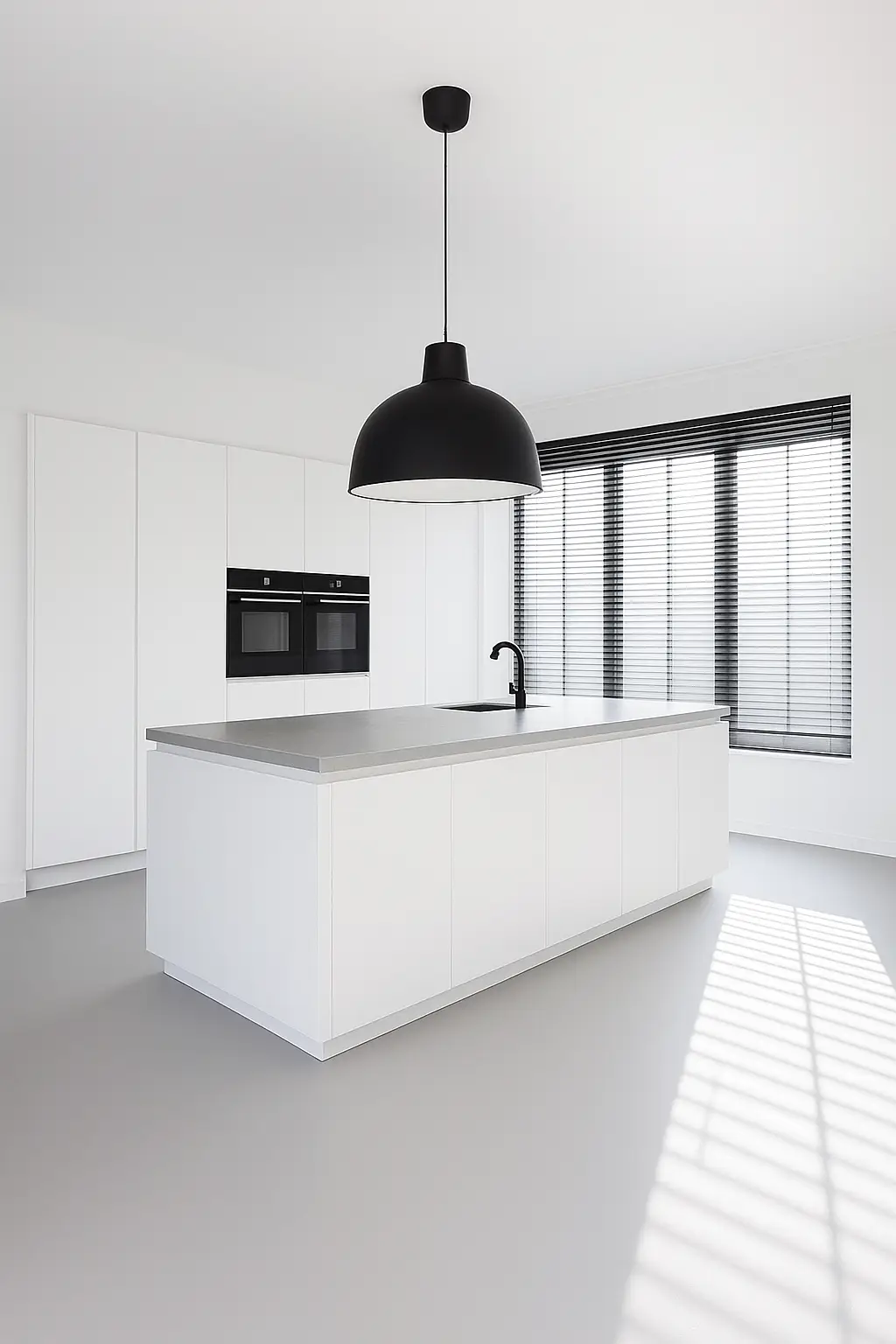
Multiple PU layers for the kitchen floor
The epoxy components themselves form a dense, closed mass. Splashes, crumbs and water stains do not penetrate the floor — they remain on the surface and can be wiped away with a damp cloth.
For kitchen floors, the finish receives multiple layers of filling PU — more than for a bathroom. This PU fills small irregularities in the structure and provides extra wear resistance against sliding chairs and heavy use in hospitality settings.
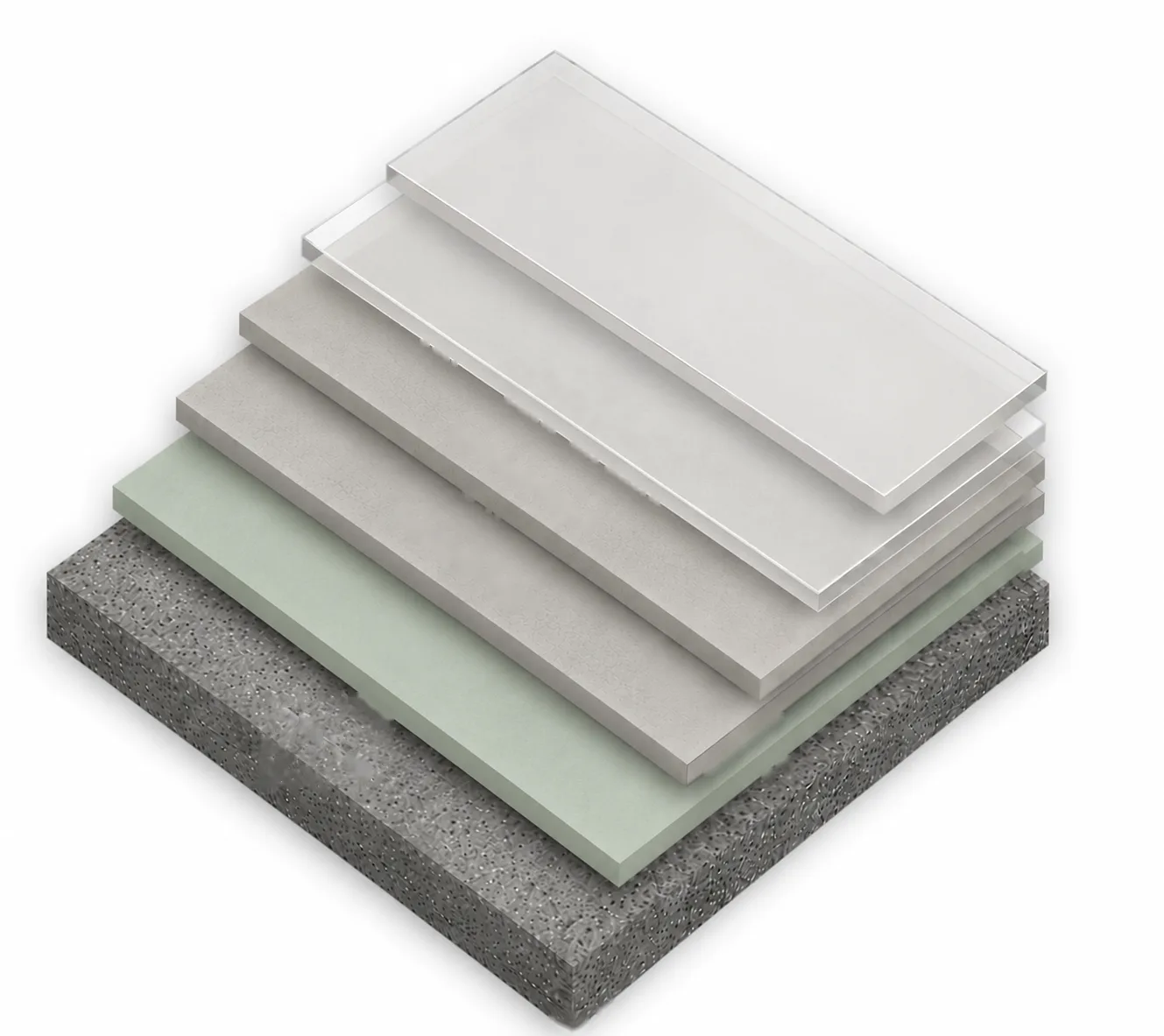
The build-up of a Lavasteen floor
Why lava stone in a kitchen
A kitchen is a workspace that takes daily wear and tear — sliding chairs, falling kitchen utensils, splashes of oil and water. Lavasteen is made for this: a trowel-applied epoxy finish with ground lava stone, which runs continuously across the entire space without joints or edges. By far the best product for both floor and wall, also as a splashback behind the worktop or hob.
Waterproof thanks to the epoxy components
Unlike a microcement floor (where a PU topcoat provides the waterproofing), Lavasteen is completely waterproof through the epoxy components themselves. The paste forms a closed mass, identical on floor and wall. A scratch or impact in the top layer does not mean water can penetrate — the finish remains sealed throughout its entire thickness.
Slip-resistant through natural grain
The ground lava stone creates a fine grain structure on the floor; the same paste gives a finer finish on the wall. Under bare feet or slippers, the floor feels solid and grippy, even when wet. No separate anti-slip layer needed — the application technique partly determines how dense the structure becomes; the craftsmanship of the applicator plays a major role.
Multiple PU layers for kitchen floor
For a kitchen floor, multiple layers of filling PU are applied on top — more than for a bathroom (where one layer suffices). This PU is not a primary protective layer, but a filler for small irregularities in the natural structure. At the same time, it provides extra wear resistance against the daily use of a kitchen — and in commercial hospitality kitchens, the number of layers is even higher.
Colour and light
Lavasteen is available in 20 standard colours, from light cream to deep anthracite, with natural nuance from the mineral aggregates. Bespoke colours in NCS or RAL are possible, but require additional time for mixing and testing. Always test with colour samples under your own kitchen lighting (and on the wall if that's where you want it) before you decide.
Combination with microcement walls
The ideal kitchen combination: Lavasteen on the floor (and optionally as a splashback), microcement on the remaining walls. Both mineral, seamless finishes with a matte appearance. The floor is grainy and solid, the wall can be smooth-trowelled or fine-textured — creating an entire kitchen that feels like one material.
Microcement
Thinner, matte, in your colour
Microcement is a thinner finish (1–2 mm) than Lavasteen Seamless Floor, and particularly suitable for the splashback or accent wall in the kitchen — no joints, continuous, in your colour. For floors, microcement is suitable in living-dining kitchens and family kitchens; for commercial applications, Lavasteen remains the more durable choice.
Can be combined as one whole: Lavasteen floor plus microcement wall in the same colour family.