
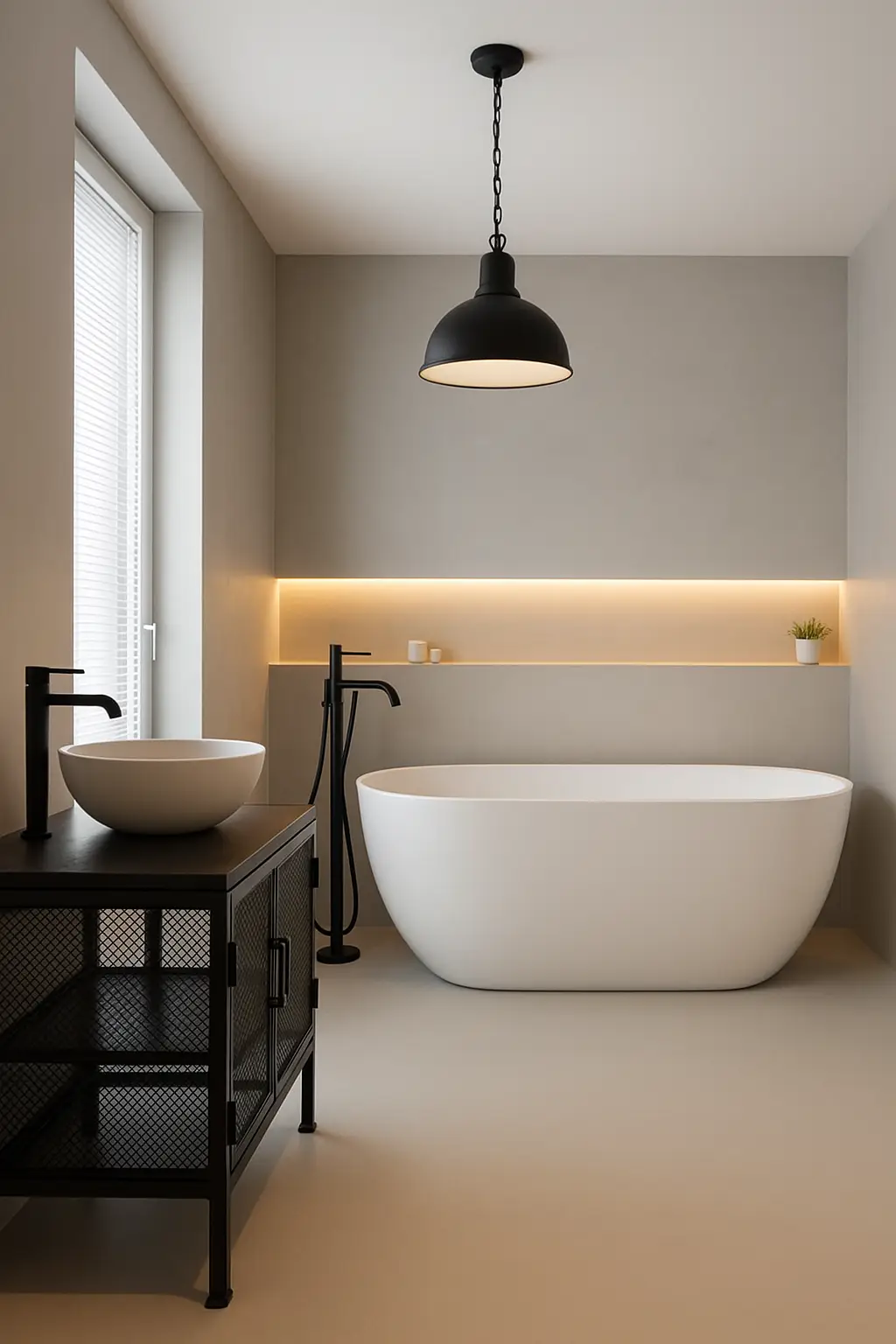
Lavasteen in the bathroom
for floor and wall.
A finish with ground lava stone in epoxy — fully waterproof through the epoxy components themselves, suitable for both floor and wall. Seamless, slip-resistant, and by far the best product for a wet room.
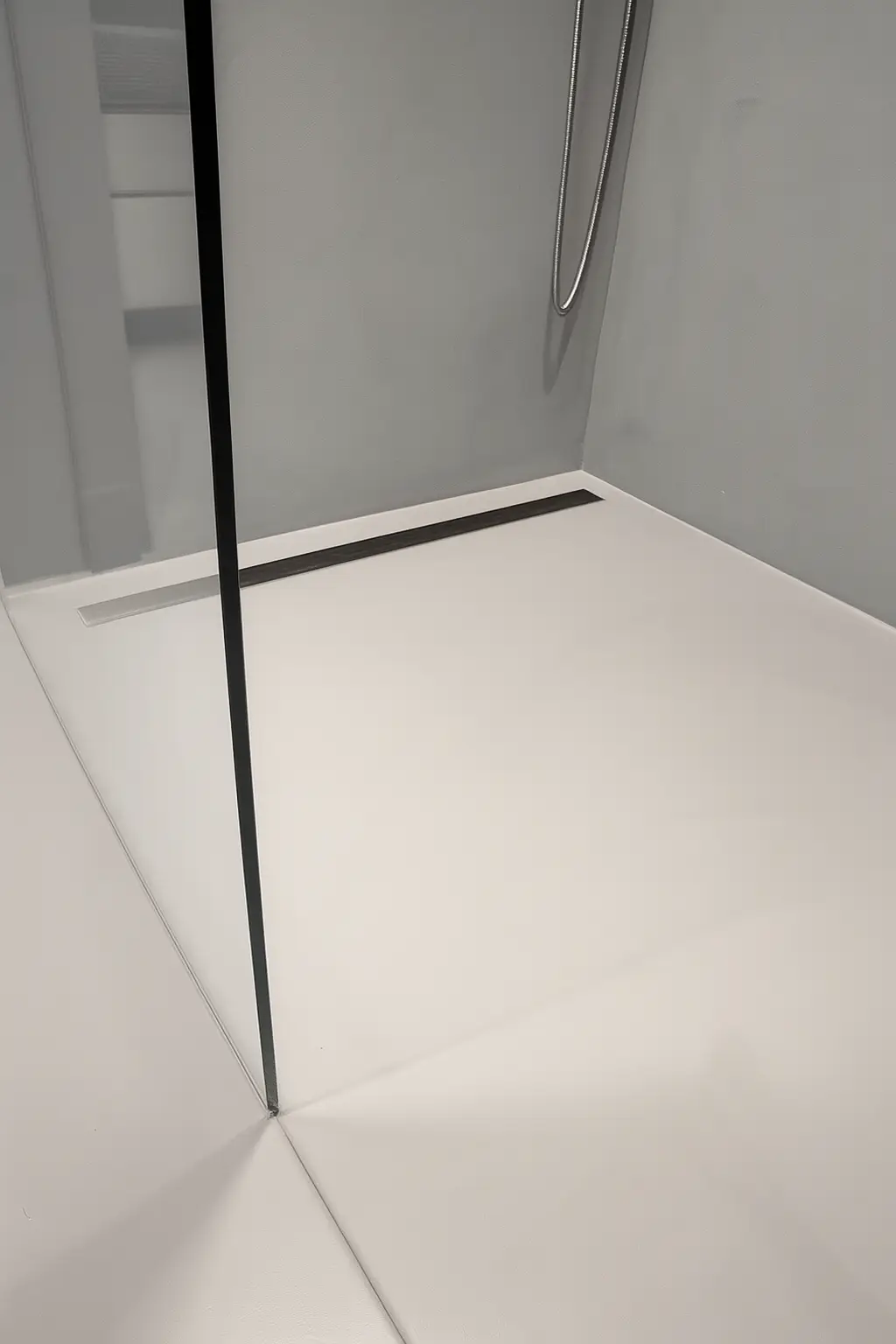
One continuous surface, floor and wall
Lavasteen is a trowel-applied finish in which ground lava stone is incorporated into epoxy. No tiles, no grout lines — the surface runs uninterrupted from the shower enclosure, past the vanity unit, to around the wall niches.
Suitable for both floor and wall. The application technique partly determines how dense the structure becomes — an experienced applicator makes the difference.
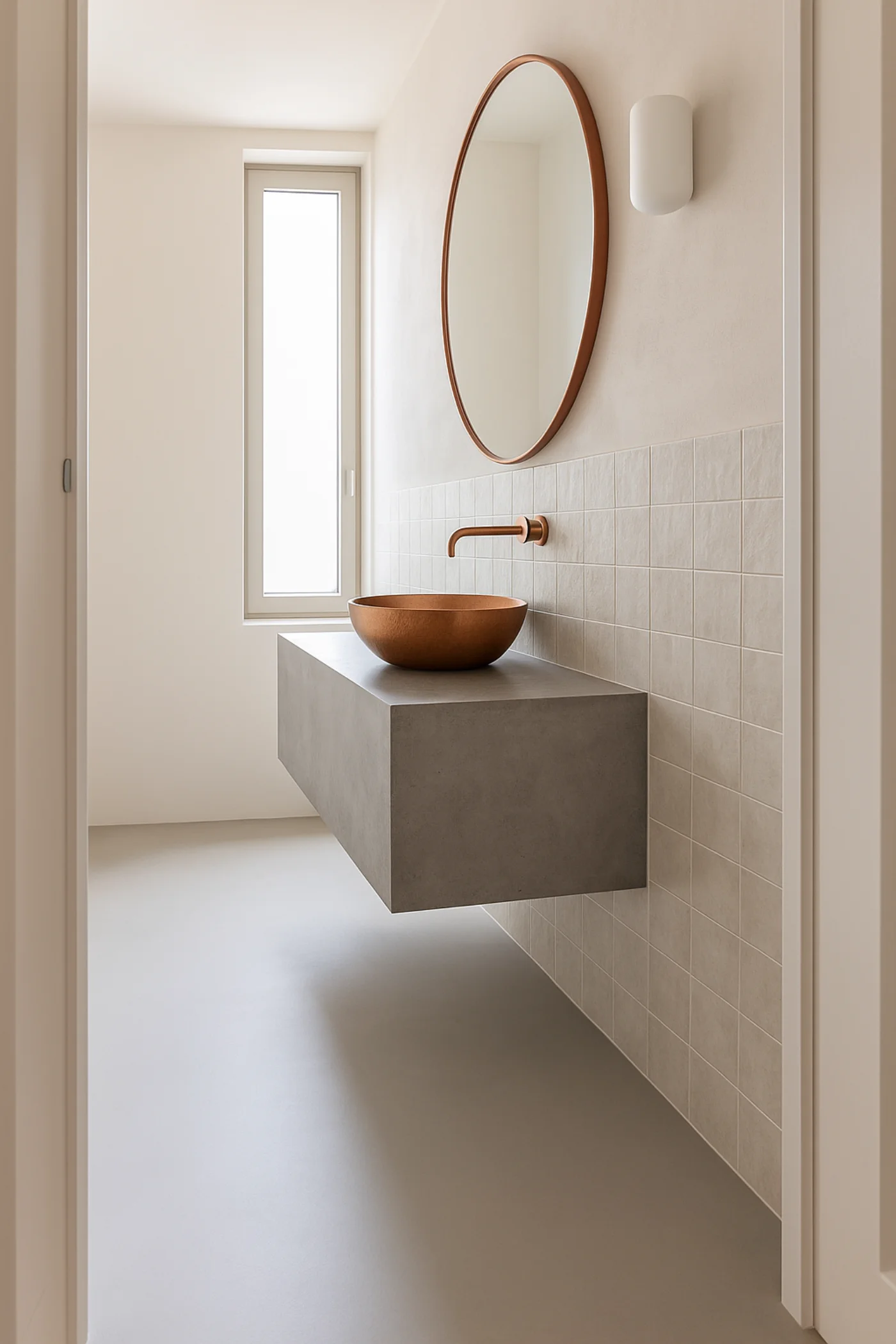
Waterproof thanks to the epoxy itself
The waterproofing of Lavasteen does not work via a topcoat: the epoxy components themselves form a fully sealed mass. Even if the top surface is damaged, the finish remains waterproof — on the floor and on the wall.
This makes Lavasteen by far the best product for walk-in showers and wet rooms — one continuous mineral surface from floor to ceiling.
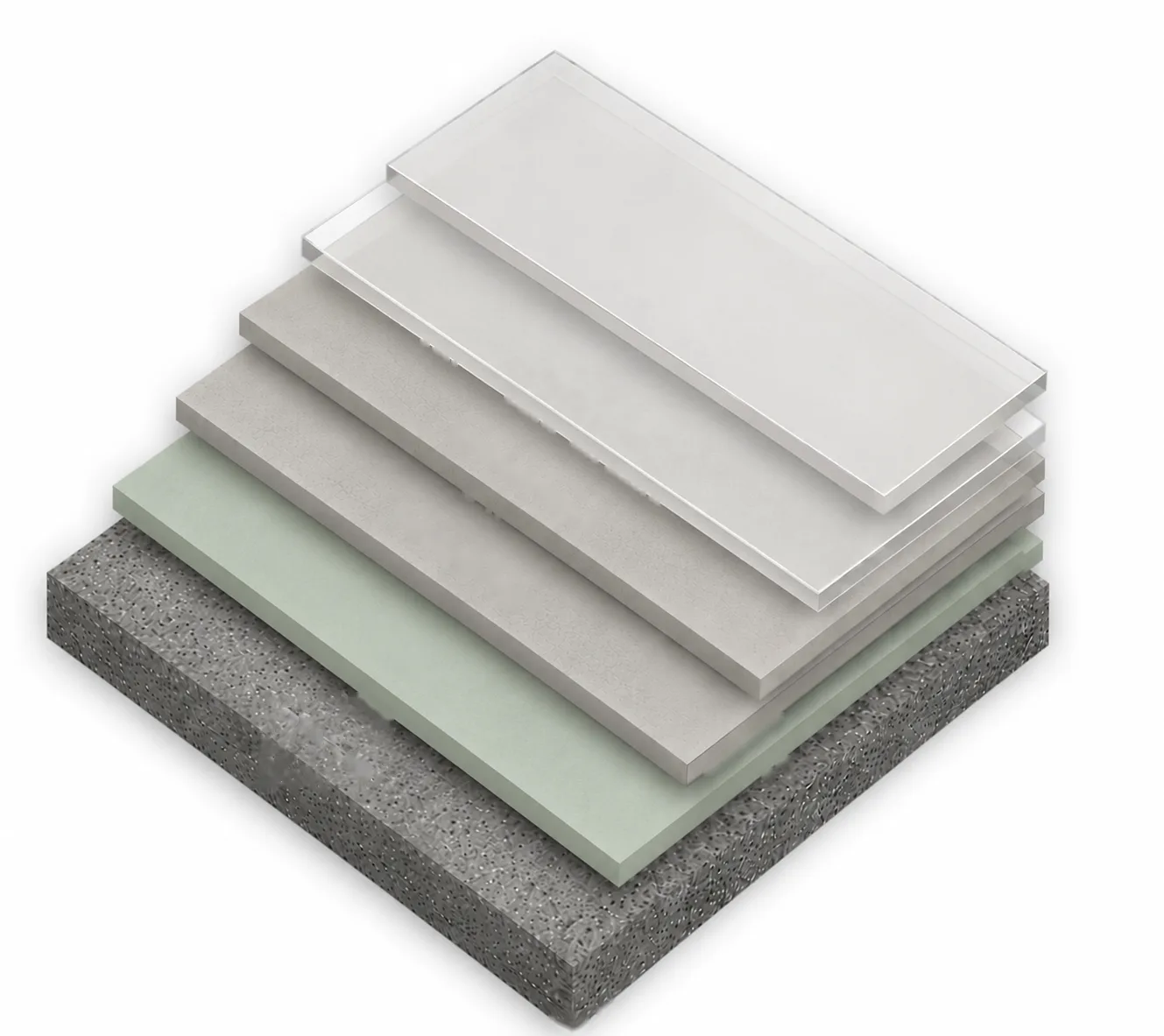
The build-up of a Lavasteen floor
Why Lavasteen in a bathroom
Lavasteen is a rational choice in the bathroom — for both floor and wall. No grout lines, no tile edges where dirt accumulates, no risk of leaks between grouting. By far the best product for a wet room, ideal for walk-in showers with linear drainage where the shower drain simply forms part of the same seamless floor that transitions into the wall.
Waterproof thanks to the epoxy components
Unlike a microcement wall, the waterproofing of Lavasteen does not work via a topcoat, but through the epoxy components themselves. These form a closed, continuous mass — identical on floor and wall. A scratch or impact in the top layer does not mean water can penetrate; the finish remains waterproof throughout its entire thickness.
Slip resistance from texture, not coating
The ground lava stone creates a natural granular structure on the floor; on the wall, the same paste results in a finer texture. Under bare feet it feels firm and grippy, even when wet. The application technique partly determines how dense the structure becomes — the craftsman's skill plays a major role in the final result.
The filling PU layer
A filling PU layer is applied over the lava stone surface. This PU is not primarily a protective layer, but a filler for small imperfections in the natural structure. For bathroom floors and walls, one layer suffices — for more heavily used floors (kitchen, living room, hospitality), additional layers are applied.
Colour and light
Lavasteen is available in 20 standard colours — from light cream to deep anthracite, with natural nuance from the mineral grains. Bespoke colours in NCS or RAL are possible, but require extra time for mixing and testing. A shade that works in the showroom may appear different at home due to variations in lighting — testing with colour samples on site (both floor and wall) is essential.
Combination with microcement walls
Either the entire bathroom in Lavasteen (floor and wall), or the combination with microcement walls. Both mineral, seamless finishes with a matte appearance — only the texture differs subtly between wall (smooth-trowelled microcement) and floor (granular Lavasteen). The eye rests, the space feels calmer and larger.
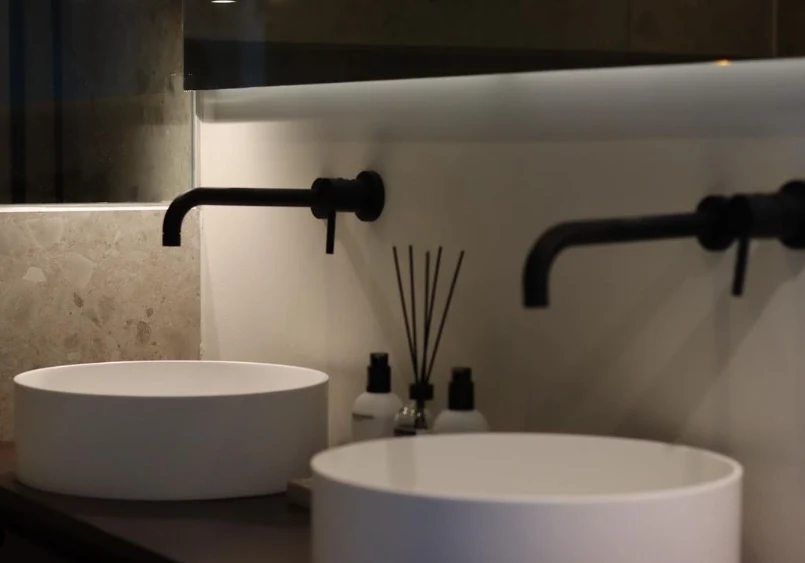
Microcement
Matte, mineral, in your colour
Microcement is a mineral wall finish with a matte concrete look — one continuous surface from floor to ceiling, no joints that expand or become dirty.
In a wet room, the wall receives two to three coats of PU topcoat as standard, making it fully waterproof. Microcement is available in 36 standard colours and bespoke via NCS, RAL and RAL Design.
Combine microcement walls with a Lavasteen floor for a mineral interior that feels like one material.
Curious about all materials for a seamless bathroom? Read seamless bathroom — comparison, costs and disadvantages at a glance.